Mining
Globe targets first production in 2028
November 16, 2026 / Jacqueline MONJEZA
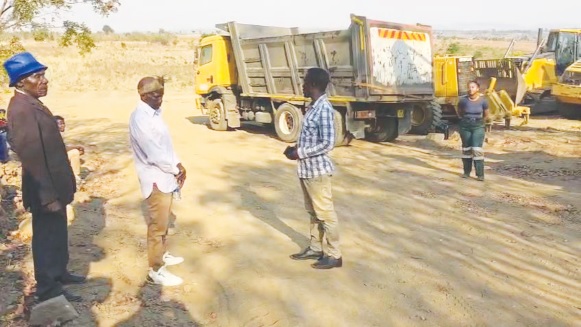
ASX-listed Globe Metals & Mining has commenced early mining activities at its Kanyika Niobium Project in Mzimba, marking an important step in the Project's development.
Mining Programme and Ore Stockpiling
Interim CEO and CFO Charles Altshuler explains that the the mining programme involves the progressive development of a series of strategically located pits across the main Kanyika orebody, with three key objectives including:
• Improve Mineral Resource Confidence:
Extract mineralised material from different locations across the orebody for bulk sampling and grade verification, providing additional data to validate and improve confidence in the existing Mineral Resource estimates.
• Establish Ore Stockpiles for Commissioning:
Progressively build stockpiles of niobium-bearing material to provide feedstock for future processing plant commissioning and testing.
• Support Infrastructure Development:
Extract and utilise suitable non-ore bearing material for the construction of processing plant terraces, foundations, roads and other supporting mine infrastructure.
Altshuler comments: "It is particularly pleasing to see mining activities physically underway at Kanyika after years of planning, technical studies and development work. This is an important milestone and a tangible demonstration of our commitment to bringing the Project into production.”
“There is still considerable work ahead, but we are now building on the groundwork completed in recent months and maintaining a clear pathway towards first production in 2028.”
“We believe Kanyika has the potential to become an important alternative source of niobium and tantalum for global markets, and we remain committed to unlocking that potential for our shareholders and stakeholders in Malawi."
Mining is being undertaken progressively in successive batches of approximately 5,000 tonnes of excavated material per batch. Each mining area is planned to extend approximately 50 metres in length and 16 metres in width, to a depth of approximately 2.5 metres, with access provided by a 40-metre ramp.
The mining areas are being selected based on geological drilling data, near-surface mineralisation and the existing Mineral Resource model. Ore-bearing material is excavated, hauled approximately 600 metres to the designated stockpile area and progressively accumulated for future processing plant commissioning and operational requirements. Suitable non-ore-bearing material is managed separately and utilised for mine infrastructure development.
Mining activities are being undertaken by local contractor OG Plant Hire under the supervision of Globe's on-site technical team.
Mineralisation and Ore Characteristics
Based on the existing geological drilling data and Mineral Resource model announced to the ASX on 11 July 2018, the material within the planned mining area is estimated to contain average grades of approximately 0.45% Nb₂O₅ and 0.015% Ta₂O₅, subject to verification through sampling and assessment of the excavated material.
Initial observations indicate that the excavated material is predominantly fine-grained and unconsolidated, with no significant hard rock encountered during the early stages of excavation. These conditions are encouraging for the mechanical mining approach being employed, although further excavation and assessment will be undertaken as mining progresses.
The programme will also provide valuable information on mineralisation, grade distribution, excavation conditions and material handling characteristics to support subsequent mining activities and future processing operations.
Community Engagement and Traditional Authority Support
The commencement of mining activities was marked by a traditional ceremony attended by the three local area chiefs, who formally expressed their support and approval for mining activities to commence at Kanyika. The ceremony reflects the Company's ongoing engagement with traditional authorities and local communities as the Project progresses into active mine development.
Progressing Project Development
The commencement of mining follows the completion of several important preparatory activities, including the Phase 1 compensation programme, upgrades to the access roads, site clearing and preparation of the mining and stockpiling areas, and improvements to the on-site accommodation and supporting facilities.
Together, these activities have established the site access and operational infrastructure necessary to commence physical mining operations, representing a progression from preparatory works to active mine development.
The Company remains focused on progressing Kanyika towards first production in early 2028.
Share this:
Leave a Comment
Comments
Mining & Trade Review News

Agribusiness News

Subscribe to Newsletter
Rehabilitation:
The establishment of a stable and self-sustaining ecosystem, but not necessarily the one that existed before mining began. In many cases, complete restoration may be impossible, but successful remediation, reclamation, and rehabilitation can result in the timely establishment of a functional ecosystem.
Archives
Remediation:
The cleanup of the contaminated area to safe levels by removing or isolating contaminants. At mine sites, remediation often consists of isolating contaminated material in pre-existing tailings storage facilities, capping tailings and waste rock stockpiles with clean topsoil, and collecting and treating any contaminated mine water if necessary.
Stakeholders Logos